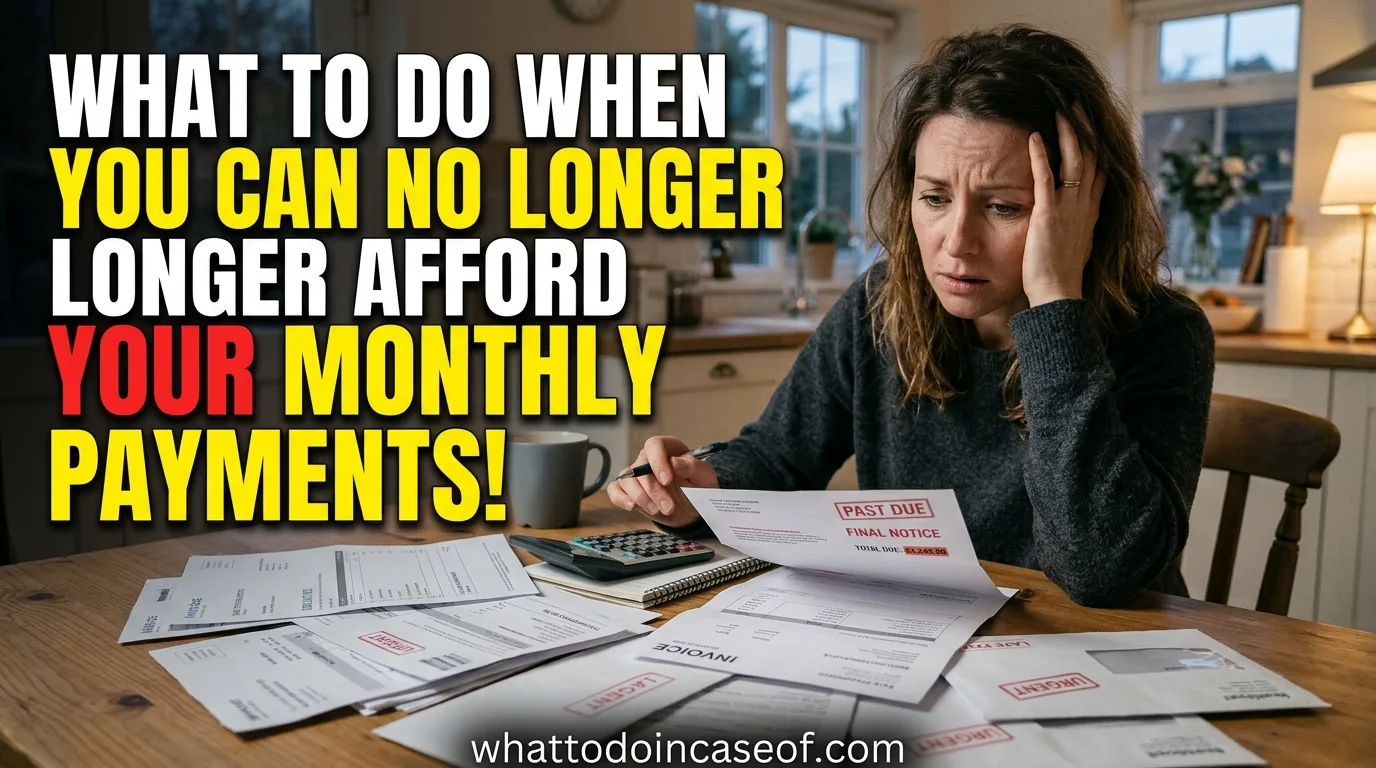
The rent is due, the car payment clears on Friday, and the credit card minimum is already sitting in your inbox. You have done the math three times and it still does not work. That knot in your stomach is not a sign you failed; it is a sign you need a plan, and you need it this week.
This guide walks you through exactly what to do when you can no longer afford your monthly payments, in the order you should do it. No lectures, no vague pep talks. Just the sequence that keeps a bad month from turning into a bad year.
What "can't afford" actually looks like
Most people wait far too long before admitting there is a problem. They cover groceries with a credit card, skip one bill to pay another, or raid savings they were counting on. If any of that sounds familiar, you are in the right place.
It matters because missed payments get expensive fast. Late fees stack up, interest climbs, and your credit record takes hits that follow you for years. The earlier you act, the more options you have. Wait until the accounts are already in collections and the menu shrinks dramatically.
The biggest mistake? Going silent. Lenders and service providers deal with this every day, and most would rather work something out than chase you. Hiding from the problem is the one move that reliably makes it worse.
Why does this happen even when you budget?
It almost never comes down to one reckless purchase. More often it is a squeeze from several directions at once.
Income changed. A job loss, fewer shifts, a contract ending, or a partner's income dropping out. Fixed payments that were fine on your old salary suddenly are not.
Costs crept up. Groceries, insurance, energy, childcare. None of these announce themselves, but together they can eat the breathing room you had last year. Our guide on how inflation affects your budget is worth a read if this sounds like you.
A payment grew. Variable-rate loans, adjustable mortgages, or a credit card balance that ballooned. The payment you signed up for is not the payment you are making now.
Life happened. A medical bill, a car repair, a move, a separation. One-off events that turn into permanent monthly obligations.
Run your actual numbers rather than your remembered ones. A budget calculator will show you in minutes whether you have a small gap or a genuine shortfall. You cannot fix what you have not measured.
Your realistic options, honestly compared
Here is the menu. Not every option fits every situation, but knowing what exists stops the panic.
1. Cut the payment, not the bill
Call the lender or provider before you miss a payment. Ask about a hardship program, a temporary reduced payment, a deferral, or a modified term. Many banks, utilities, and phone companies have these; they just do not advertise them.
The upside: keeps your account in good standing and buys breathing room. The downside: interest may still accrue, and some plans add fees. It makes sense when the problem is temporary, like a few months between jobs.
2. Prioritize the payments that hurt most to miss
You cannot pay everything, so pay in order of consequence. Housing, utilities, and anything securing essential transport come first. Unsecured debts like credit cards generally come last, because the fallout is slower and more negotiable.
The upside: protects your home and your ability to get to work. The downside: credit card balances grow. This is triage, not a long-term fix.
3. Consolidate or refinance
Rolling several high-interest debts into one lower-rate loan can shrink the monthly total. A debt payoff calculator shows what a consolidated payment would look like versus what you pay now.
The upside: one payment, often smaller, sometimes a lower rate. The downside: a longer term can mean more total interest, and you need decent credit to qualify for a good rate. Be wary of any offer that charges upfront fees or promises to "erase" debt.
4. Negotiate the debt itself
If you are already behind, some creditors will accept less than you owe, or set up an interest-free repayment plan. This is real, but it damages your credit and should be a last resort before default, not a first move.
5. Sell or downsize the thing behind the payment
That second car, the financed furniture, the subscription stack. If a payment is attached to an asset you can live without, letting it go can be the fastest fix of all.
6. Get breathing room from a nonprofit credit counselor
Reputable nonprofit counseling services exist in most countries and often charge little or nothing. They can negotiate with creditors on your behalf and help you build a repayment plan. Verify they are legitimate and regulated before sharing anything.
So which one should you pick?
It depends on one question: is this a short-term gap or a long-term shortfall?
If your income dipped temporarily and will recover, ask for a hardship plan and protect your essential bills. If your income has permanently dropped or your debts have outgrown it, cutting one payment will not be enough. You need to restructure the whole picture, which usually means consolidation, downsizing, or counseling.
If you are not sure which camp you are in, our recommendation tool can point you toward the right path based on your situation. There is no single right answer, and anyone who tells you otherwise is selling something.
Your step-by-step action plan for this week
Do these in order. You can get through most of it in a single afternoon.
- List every payment. Amount, due date, interest rate, and what happens if you miss it. Write it down.
- Add up your real income and essential costs. Use a budget calculator and be honest about essentials.
- Find the exact gap. How much short are you each month? That number drives every decision.
- Call the most important creditor first. Housing, then utilities, then transport. Ask for hardship options before you are late.
- Cut what you can immediately. Pause subscriptions, call providers for better rates, sell what you do not use.
- Choose one bigger move. Hardship plan, consolidation, downsizing, or counseling. Pick based on whether the gap is temporary or permanent.
- Get every agreement in writing. Email confirmation, a letter, anything. Verbal promises evaporate.
- Set a review date. Check back in 30 days. Is the plan working, or do you need the next option?
If a checklist helps you stay on track, our ready-to-use checklists cover exactly this kind of scenario.
Mistakes that make it worse
- Going silent. Fix: make one call today, even if it is just to ask what options exist.
- Paying the loudest bill instead of the most important one. Fix: rank bills by consequence, not by who calls most.
- Borrowing to cover the shortfall. Fix: a new loan can buy a month but rarely fixes the cause.
- Falling for debt-relief scams. Fix: never pay upfront fees, and check any service against a regulated registry.
- Ignoring the small stuff. Fix: cancel subscriptions and renegotiate phone and insurance this week; it adds up faster than you think.
- Agreeing to a plan you cannot keep. Fix: only commit to a payment you can actually make, even if it is smaller.
The one thing that matters most
Act early and talk to people before they chase you. Almost every option on this list gets harder, more expensive, or disappears once you are already behind. The person who calls their lender a week before the missed payment has far more leverage than the one who calls three months after.
You are not the first person this has happened to, and the system has paths through it. Use them while they are still open.
FAQ
Will calling my lender make things worse? No. Reaching out before a missed payment usually improves your standing and widens your options. Silence is what hurts.
Can I negotiate a lower monthly payment if I am already behind? Often yes, though it depends on the creditor and your history. Ask specifically about hardship programs, deferrals, or modified terms, and get the agreement in writing.
Does debt consolidation hurt my credit? Applying for new credit can cause a small, temporary dip. On the other hand, paying down balances on time can help over time. Check the terms carefully before committing.
What if I can only pay some of my bills this month? Pay in order of consequence: housing, utilities, and essential transport first. Unsecured debts like credit cards generally come last.
How do I know if a credit counselor is legitimate? Look for a regulated nonprofit, check reviews and registrations, and walk away from anyone charging large upfront fees or promising to erase debt.
This is general information, not financial advice. Money rules and rates vary by country, verify with official or regulated sources before acting.